
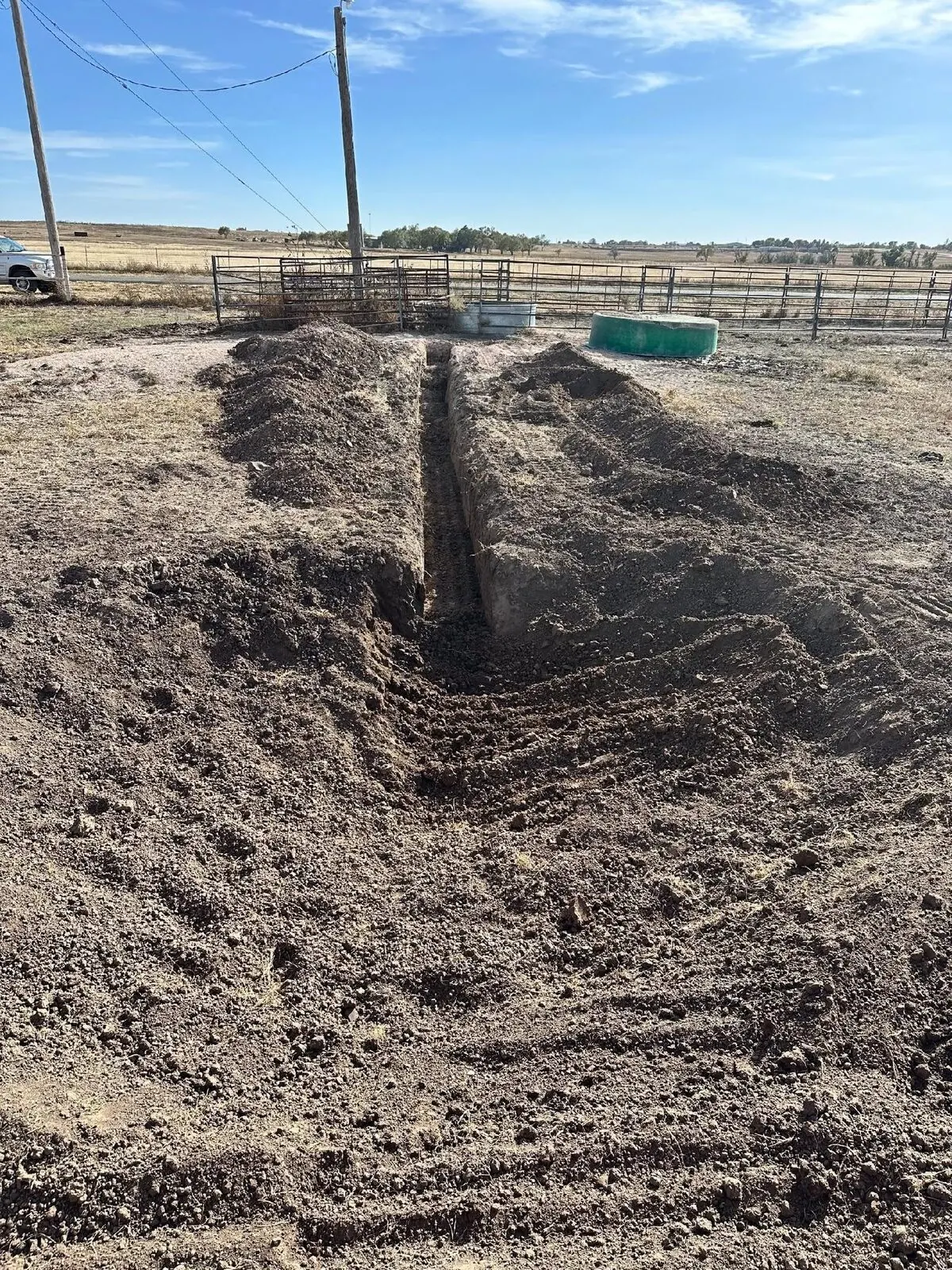
Out here, water is either too scarce or all at once. When a Panhandle gully-washer drops two inches in an hour, tight clay and caliche soils do not soak it up fast, so it pools, runs where it should not, and goes to work on your foundation, fields and driveways. A French drain is a simple, proven fix: a gravel-filled trench with a perforated pipe that collects groundwater and carries it somewhere safe. Here are seven signs your property could use one.
1. Water pools and just sits
If part of your yard or lot holds water for hours or days after a rain, the ground is not draining. A French drain gives that water a fast path out instead of letting it stand.
2. There is moisture against your foundation
Water pooling next to a slab or footing is the expensive kind of problem. Over time it works into the foundation and the soil that supports it. A perimeter French drain pulls groundwater away before it gets there.
3. Your crawlspace or shop floor gets damp
Musty smells, damp concrete, or standing water in a crawlspace or metal building almost always trace back to poor drainage outside. Move the water and the inside dries out.
4. You have washouts and erosion
Channels cutting across a driveway, a pasture, or a slope mean water is running fast and concentrated. Combining a French drain with surface ditching and erosion control slows and redirects it.
5. Grass is dying in low spots
Turf and crops drown, too. Yellow, thin, or dead grass in the same low areas every year is a drainage signal, not a fertilizer problem.
6. Mildew, mold, or algae keep coming back
Persistent green or black growth on north-side foundations, fences, or slabs points to ground that stays wet. Drying the soil out starves it.
7. Caliche and hardpan trap water
A lot of Panhandle ground has a caliche or hardpan layer that water cannot pass through, so it perches near the surface. A properly bedded French drain gives that trapped water a way to move laterally to a lower outfall.
How we build them to work
A French drain only works if the water has somewhere to go. We set the trench and pipe on a real slope, wrap the gravel in filter fabric so it does not silt up, and daylight the outlet at a lower point or tie it into a larger drainage plan. Done right, it is one of the best-value fixes on a property. If any of these signs sound familiar, get in touch for a free estimate and we will figure out where your water is going and where it should go instead.